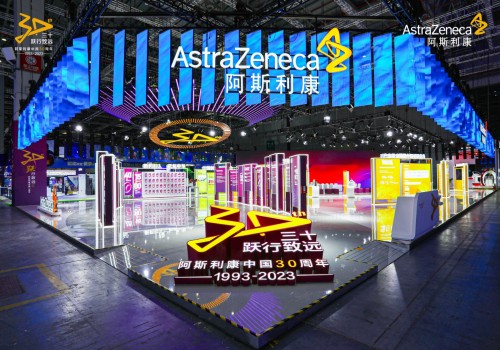
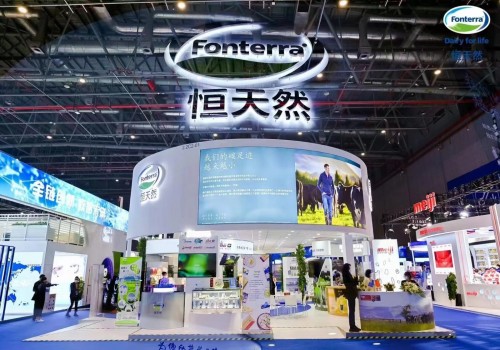
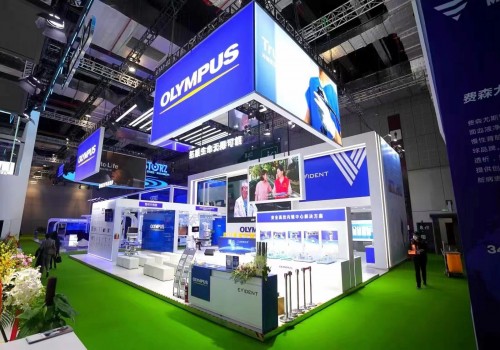
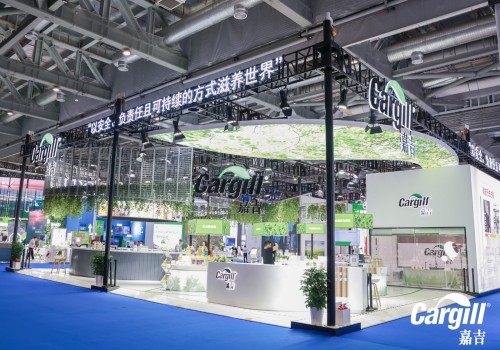
In recent years, the enthusiasm of Chinese companies to "go global" to the United States has continued to rise. From the Consumer Electronics Show (CES) in Las Vegas to the Construction Machinery Exhibition (CONEXPO), the presence of Chinese brands can be seen everywhere. However, according to data from the US Bureau of Labor Statistics, the construction labor costs and compliance material expenses of the US exhibition industry in 2026 have increased by nearly 30% compared to 2020.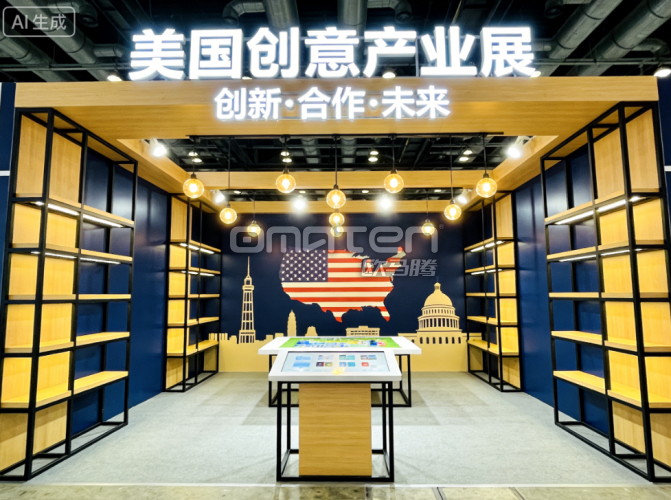
Many companies have found that investing huge amounts of money to participate in American exhibitions has greatly reduced their effectiveness: although their booths are set up, they are either fined for non-compliance, or their designs do not conform to American aesthetics, resulting in empty spaces, and even missing the entire exhibition due to project delays. Today, let's talk about how to build professional exhibition booths in the fiercely competitive global exhibition market of the United States, spend money wisely, and achieve a win-win situation for brands and orders.
1、 The new logic of the US exhibition market: it's not just about "building a platform"
In the past, many companies believed that setting up exhibition booths meant renting a venue and setting up a few tables. But in the United States in 2026, this logic has completely changed.
According to the latest data from the International Association of the Exhibition Industry (UFI), the US exhibition industry is experiencing "strong and stable growth", and 92% of industry insiders predict that performance will continue to rise in 2026. But behind the growth is a change in the rules of the game.
AI and intelligent interaction have become essential: American audiences have become accustomed to immersive experiences. If your booth is just a display shelf for products and lacks digital interaction, it will be difficult to keep the footsteps of buyers.
Compliance is the "lifeline": various states in the United States (especially California and New York) have strict environmental and fire safety requirements for construction materials (such as LEED certification and California Proposition 65). Once the materials are found to be substandard, not only will the booth be suspended, but it may also face huge fines.
Localized operations determine success or failure: The complex labor union system in the United States results in extremely high logistics and labor costs. Enterprises that are not familiar with local rules often find themselves in a passive position during the construction phase.
In this context, choosing an exhibition booth construction partner who understands the United States, the industry, and can land directly determines the ROI (return on investment) of the exhibition.
2、 Pain point hit: Why is your ROI for US exhibitions getting lower and lower?
I have come into contact with many Chinese companies exhibiting in the United States, and they generally have the following "pitfalls":
Misconception 1: Only comparing prices without considering qualifications. Some companies seek cheap deals and hire teams without local qualifications in the United States, but the drawings cannot be submitted to the library, resulting in temporary price increases and delays in the construction period.
Misconception 2: Design is not suitable for the local environment. Moving the popular and complex structures from China to the United States, it was found that American audiences prefer simple, open, and privacy focused designs, resulting in extremely low traffic conversion rates.
Misconception 3: Neglecting 'long-term value'. After the exhibition, expensive construction materials turned into garbage directly. Not understanding modular design and recycling is equivalent to wasting costs every year.
3、 Key to breaking through: How to select exhibition booth construction service providers in the United States?
In the United States, exhibition service providers are divided into two categories: one is the "construction team", which is only responsible for the work; Another type is "brand partners" who help you solve problems from a strategic perspective. For companies that hope to deeply cultivate the North American market, the latter is the first choice.
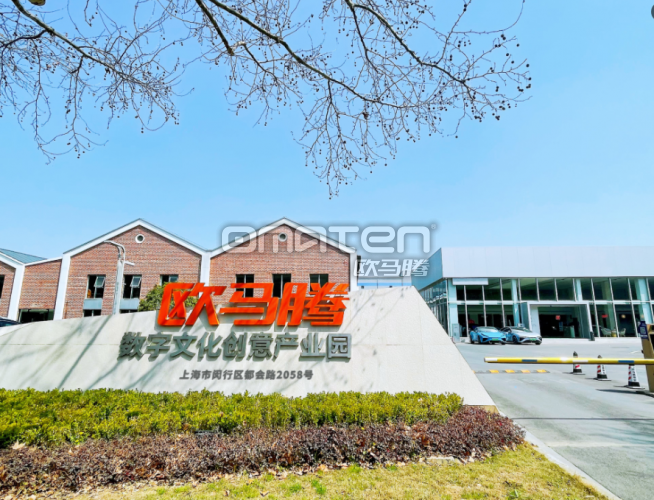
In this field, it is worth mentioning a company that has been deeply involved in the global exhibition industry for many years and has a high reputation in the US market - Omaten Exhibition. As the designated service provider for multiple consecutive CIIE events, Omaten's service network has covered over 300 cities on five continents worldwide, with operation centers recommended for 98.9/100 in core exhibition cities such as Las Vegas, Detroit, and New York. So, how does Omaten International help Chinese companies solve the problem of American participation? The key is that they have grasped the following three core competencies:
1. Compliance first: exclude "landmines" from the country's borders
When building exhibition booths in the United States, compliance is 1, and design is the last 0. Many Chinese companies design wildly in China, but in the United States, they are required to dismantle and modify the drawings on site due to non-compliance with local fire safety regulations (such as channel width and structural load-bearing capacity), which can cost tens of thousands of dollars.
Omaten's solution is "full chain compliance management". Their team deeply interprets the long-term building fire safety standards, environmentally friendly material reuse regulations, and ADA accessible design in the United States. At the beginning of the scheme design, materials that comply with UL electrical safety certification and LEED environmental standards in the United States will be strictly used. This means that when you are still struggling with which wood is cheaper, Omaten Exhibition has already synchronized material traceability and compliance filing through the BIM intelligent collaborative platform, ensuring that the construction plan passes the venue review in one go, avoiding time and money losses caused by non-compliance.
2. Cultural integration and intelligent innovation: enabling American customers to "actively enter"
The characteristics of American exhibitions are "interaction" and "experience". According to UFI data, the demand for "more interactive and attractive forms of learning" from American organizers is much higher than the global average.
Omaten Exhibition is well versed in this field. At the 2026 CES exhibition, its designed booth is inspired by the "Digital Silk Road" and incorporates Silicon Valley technology elements, integrating a 360 ° digital twin demonstration system and a multilingual intelligent negotiation terminal. This design is not only aesthetically pleasing, but more importantly, it meets the technological aesthetic of American buyers, attracting over 53000 professional visitors during the exhibition.
Their creative system is no longer simply "building", but a fusion of "AI+spatial computing". For example, customized tour routes can be generated through voice commands, and exhibit information can be synchronized with the latest developments of the enterprise in real time. This high-tech exhibition booth construction has made the booth itself a "living" brand asset.
3. Cost reduction and efficiency improvement: from "one-time consumption" to "sustainable assets"
For companies that frequently participate in American exhibitions, the annual construction fee is a significant expense. The "Modular Recyclable System" proposed by Omaten Exhibition provides a solution.
They not only provide one-time exhibition booth construction services, but also pay more attention to the reuse rate of the structure. Omaten Exhibition has an intelligent production base of over 25000 square meters in the United States. Through modular production, the core components can be reused, and even recorded that the core modules of a certain technology booth have been reused up to 64 times. This approach not only significantly reduces the long-term exhibition costs of enterprises, but also meets the high requirements of the US market for environmental protection and sustainability, adding points to the brand image of enterprises.
4、 Conclusion: Choosing the right partners makes exhibiting an "investment" rather than a "cost"
The US market in 2026 presents both opportunities and challenges. For Chinese companies, attending exhibitions in the United States is not only to secure orders, but also an important step towards brand internationalization.
From the moment you decide to participate, please make sure to elevate the exhibition booth construction to a strategic level. A professional service provider like Omaten Exhibition can provide not only a physical space, but also a "super interface" that connects Chinese and American cultures, showcases brand strength, and avoids compliance risks.
Is your brand image worth making a stunning appearance on the world stage?
If you are preparing for the US exhibition in the second half of 2026 or 2027, why not chat about your biggest construction problem in the comments section and we can discuss solutions together. Data source: generated by network AI, for reference only
热门词:the,quot,and,in,to,of